For most Florida homes, a standing seam metal roof is the strongest long-term roof you can buy. It handles hurricane winds, reflects heat, outlasts two or three shingle roofs, and insurers treat it well when it’s documented properly.
A metal roof still has real trade-offs, including a higher upfront cost and issues like noise, waviness, and coastal rust. It all comes down to two things: how the roof is installed and which metal you choose for your location.
We’re a roofer in Brevard County, FL, working on metal and shingle roofs in Palm Bay, Melbourne, Grant-Valkaria, and along the Space Coast. So we can show you the honest pros and cons, plus what’s changing for Florida roofs in 2026.
Standing Seam Metal Roof Pros and Cons at a Glance
| Pros | Cons (and the fix) |
| Built and tested as a system for Florida hurricane winds | Costs about twice as much as shingles upfront, but lasts two to three times as long |
| Hidden fasteners mean far fewer places for a leak to start | Rain noise, which a solid deck and full underlayment take care of |
| Lasts 40 to 70 years | Oil canning (slight waviness), which is cosmetic and reduced by thicker panels and a flat deck |
| Reflects heat; no algae streaks, rot, or termites | Can corrode near salt water if you choose the wrong metal (aluminum solves it) |
| Insurance-friendly when documented on a wind mitigation report | Dents and repairs are harder than on shingles |
| Solar panels clamp on without drilling holes | Needs an installer who does metal regularly |
What Is a Standing Seam Metal Roof?
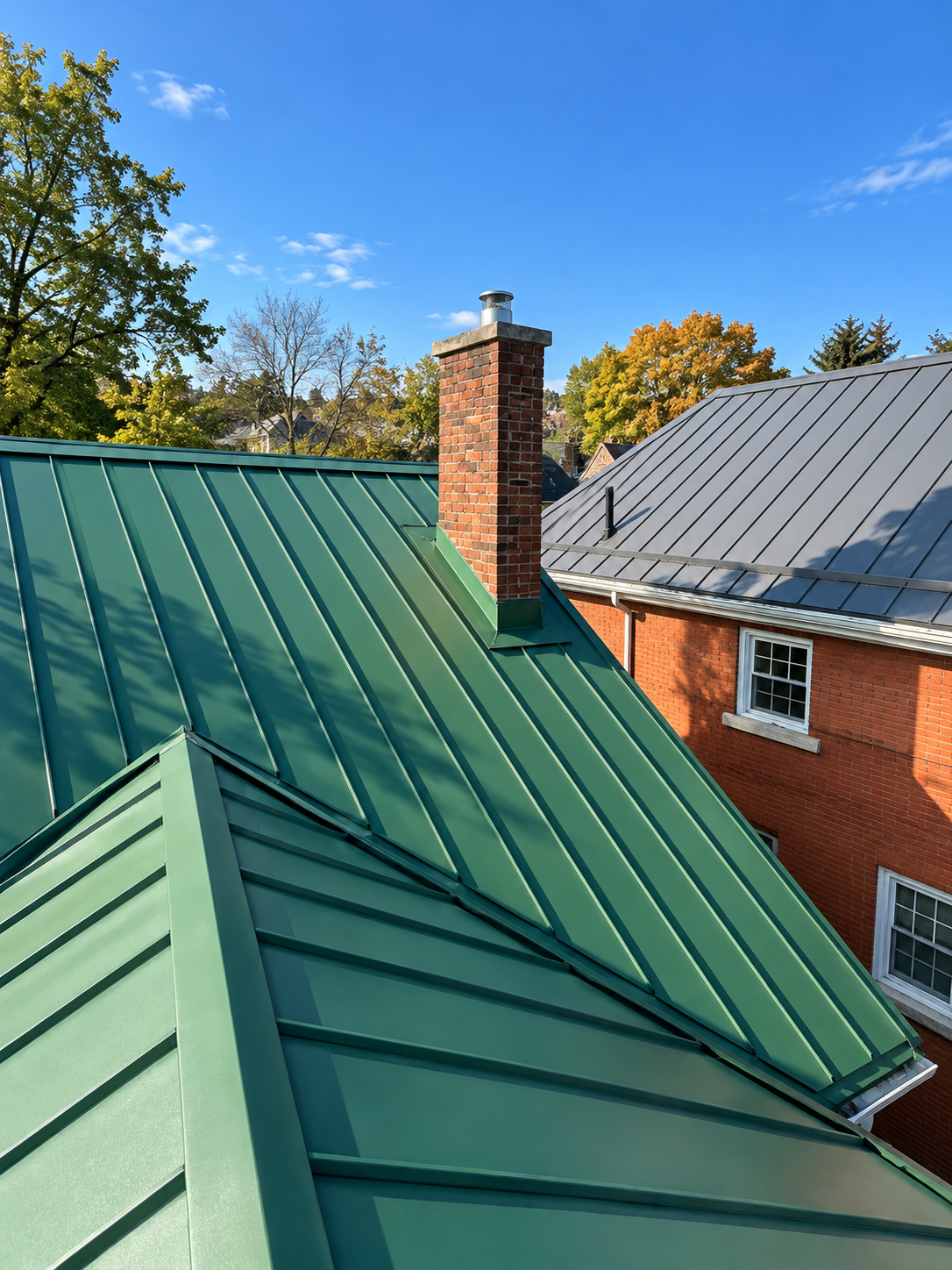
A standing seam metal roof uses long vertical metal panels that lock together at raised seams. The panels are held down by clips hidden underneath them, so no screws go through the surface that faces the weather.
That’s the big difference from 5V crimp, the classic Florida metal roof you see on older Key West-style homes. 5V panels are screwed straight through the metal face, so every screw head and rubber washer is exposed to sun and rain. 5V costs less and makes a good roof. Standing seam is the premium, lower-maintenance version.
Pros of a Standing Seam Metal Roof in Florida
Here’s why metal is best for most Florida homeowners who plan to stay put.
1. It’s Built to Withstand Hurricane Winds
When installed professionally, standing seam metal is the strongest residential roof covering for Florida winds. A standing seam metal roof is designed and tested as a complete package to withstand Florida’s toughest storms. The metal panels, hidden clips, and screws work together to handle the high wind pressures at your specific address. Plus, since Brevard County isn’t in the extreme South Florida hurricane zone, you get top-tier wind protection with standard Florida Product Approval without paying extra for Miami-Dade ratings.
2. It Eliminates Common Leak Points
Standing seam roofs outlast standard shingles and screw-down metal roofs because they simply don’t have exposed screws. On traditional metal roofs, hundreds of screws and rubber washers sit directly in the harsh Florida sun, where they eventually dry out, crack, and let water in. Standing seam tucks all its clips and fasteners safely underneath the panels, completely protected from the heat. Without exposed hardware to loosen or deteriorate over time, you get a sleek, long-lasting roof that drastically cuts down on common leaks and maintenance hassle.
3. It Lasts 40 to 70 Years (One Roof Instead of Three)
When you look at the big picture, a standing seam metal roof offers the lowest annual cost of any common Florida roof. Asphalt shingles on the Space Coast usually need replacing around year 12 or 13, but a properly installed metal roof easily lasts 40 to 70 years.
That massive lifespan is also a game-changer for home insurance. Florida law prevents insurance companies from dropping your policy just because a roof is under 15 years old, meaning a metal roof stays “young” in the eyes of insurers for decades longer than shingles ever could.
4. Cooler Attics and Algae Stains
Metal roofs naturally reflect heat instead of absorbing it the way asphalt shingles do. Choosing a light color with a high-quality PVDF paint finish keeps your attic noticeably cooler in the intense Florida sun while preserving your roof’s original color for years. Plus, metal never develops those black algae streaks, rots over time, or attracts termites, keeping your home looking sharp and clean with minimal upkeep.
5. Insurance Savings (When Documented Right)
A metal roof can help lower your insurance premiums, but metal alone isn’t enough. To secure those discounts, your insurer needs a proper wind mitigation report that details your roof covering, deck attachment, roof-to-wall connections, and secondary water barrier. Getting the right paperwork in order ensures you get every bit of financial credit you deserve.
6. Solar-Ready Without the Drill Holes
If you’re considering solar panels, standing seam is hands-down the safest roof to put them on. Solar racks clamp directly onto the raised seams, so installers don’t have to drill a single hole in your roof. On a shingle roof, every solar mount requires drilling directly into your home, creating dozens of potential leak points down the road.
Cons of a Standing Seam Metal Roof in Florida (And What Fixes Them)
Every roof has trade-offs. A lot of the warnings about metal online come from roofers who don’t install or repair metal, and most of the problems they describe come down to installation. The first five cons below are specific to standing seam. The last two apply to any metal roof. So, let’s discuss each one.
1. Higher Upfront Cost
In Brevard County, a metal roof usually costs about $800 to $1,200 per square installed (with standing seam at the top of that range), compared to $400 to $550 for standard shingles. Recent federal metal tariffs have also pushed raw steel (by 33.9%) and aluminum (by 58.0%) costs up nationwide, so older quotes are likely out of date.
Don’t just look at the upfront price tag. Calculate the cost per year as well. Because a metal roof lasts up to three times longer than shingles and earns you solid insurance discounts, it often costs far less over time. Financing options can spread the initial investment, and state home-hardening grants may lower the cost even further if you qualify.
2. Oil Canning or “Waviness” (Purely Cosmetic)
Oil canning is the slight wavy look you sometimes see on the flat parts of a metal roof when the sun hits it at a sharp angle. It’s entirely cosmetic and won’t affect how well your roof protects your home, but many homeowners still prefer to avoid it.
Waviness happens when metal expands in the heat or is installed over an uneven deck. It can be practically eliminated by using thicker metal, preparing a completely flat roof deck, adding small stiffening ribs to the panels, and spacing the mounting clips properly.
We use heavy-duty 24-gauge metal as our standard minimum. Thinner metals (like 26- or 29-gauge) are cheaper upfront, but they dent easily and are far more prone to developing that wavy appearance over time. Investing in quality, thicker metal ensures your roof looks smooth and sharp for decades.
3. Standing Seam Has Its Own Leak Points
Whether it’s metal or shingles, roof leaks in Florida almost always happen where something pierces the roof deck or meets a wall.
Common Leak Triggers:
- Penetrations & Walls: Flashing around chimneys, skylights, plumbing vents, and electric masts
- Storm Rain: Wind pushing water under roof edges or ridge caps during severe weather
- Bad Practices: Smearing caulk instead of using custom metal flashing, or installing new metal over rotten, old roofing
Look for ceiling or soffit stains, a musty attic, or water that only appears during heavy, sideways storm rain. Insist on hidden fasteners, custom-bent metal flashing, and a full tear-off down to clean wood.
Bonus peace of mind: A roof leak often damages drywall, soffits, or fascia board underneath. Because we are licensed general contractors as well as roofers, our crew fixes the roof and repairs any interior or structural damage in one smooth step, no second contractor needed.
4. Repairs Are Harder Because the Panels Interlock
Each standing seam panel locks into the one beside it, so you can’t just pull out the damaged one. Panels come out in order from the nearest edge, and a new panel won’t perfectly match one that’s been in the sun for 15 years.
To avoid this, keep a few spare panels from your job, and hire a crew that repairs standing seam, not just one that installs it. If the damage goes deeper, we handle the decking, fascia and anything else under it on the same contract.
5. It Takes a Specialist Crew
Standing seam is a different trade from shingles, and even from 5V. Panels are cut to length, seams are locked by hand or machine, clips are spaced to the product approval, and every piece of trim is bent to fit your roof. A crew that mostly does shingles can get any of those wrong.
So, before you sign anything, check your contract against Florida’s legal requirements and ask four questions:
- What’s the Florida Product Approval number for this panel and clip system?
- What gauge, metal and paint finish am I getting?
- Are the seams snap-lock or mechanically seamed, and why?
- Can I see addresses of standing seam roofs you’ve installed nearby?
6. Saltwater Corrosion (Only If You Pick the Wrong Metal)
Living on the Space Coast means ocean breezes and salt air, which can eat through the wrong type of metal roof. Inland, Galvalume steel lasts for decades, but coastal salt air will quickly break it down, and most manufacturers won’t honor warranties near saltwater.
The secret is choosing the right metal based on your exact distance from saltwater:
- Barrier Islands (Satellite Beach, Indialantic, Melbourne Beach): Aluminum is the gold standard here because it naturally resists rust. Coastal-rated aluminum panels with stainless steel fasteners offer strong protection, even within 300 feet of the ocean.
- Along the Indian River Lagoon: Treat these areas just like oceanfront property. Salt air travels, so always check the warranty’s coastal distance limits before deciding on a material.
- Mainland & Inland (Palm Bay, West Melbourne, Grant-Valkaria): High-quality 24-gauge Galvalume steel with a durable PVDF finish is the ideal, cost-effective choice once you’re safely away from direct salt exposure.
When planning a metal roof in Brevard County, the first thing to consider is your home’s exact distance from the water. An experienced roofing contractor can help you decide.
7. Possible Dents, Rain Noise, and HOA Rules (Common Worries that Matter Less than You Think)
Possible Dents
Dents are possible, but they’re rarely a serious issue in Florida. Our hail is usually small, so the biggest threat is usually a heavy falling palm frond or coconut during a storm. Even then, it typically only leaves a small cosmetic mark rather than causing a leak. You just need to choose a heavier gauge metal for extra strength, and keep overhanging tree branches trimmed back from your roof to avoid this.
Rain Noise
The loud metal roofs people remember are on barns, with panels screwed over open wood strips. On a house, metal goes over a solid plywood deck, full peel-and-stick underlayment and an insulated attic. It sounds like any other roof.
HOA Rules
Since 2024, Florida law requires every HOA (Homeowners Association) to adopt hurricane protection specifications, and roof systems that meet the Florida Building Code count. An HOA can’t deny an application that meets its adopted specifications, though it can still set color and style. Ask for those specifications in writing before you choose a color.
Is a Standing Seam Metal Roof Right for Your Brevard Home?
| If this sounds like you | Our recommendation |
| You plan to stay 10 years or more | Standing seam. The longer you stay, the better the math gets. |
| You live on the barrier island or along the lagoon | Aluminum standing seam with stainless fasteners |
| Your insurer is asking about your roof’s age | Metal resets the clock for decades, not 12 to 15 years |
| You’re planning solar | Standing seam, so the panels clamp on without holes |
| You’re selling within about 5 years, or the budget is tight | Quality shingles or 5V crimp metal |
Standing seam makes sense if you’re staying put and want to stop thinking about your roof. We install shingles too, so if metal isn’t the right call for your house, we’ll tell you.
Palm Bay
This is the call we get most when doing roofing in Palm Bay. The shingles are near 15 years old, and the insurance renewal is getting harder. Moving to metal takes the roof out of that age cycle for decades. If your home was built before 2008, check whether you qualify for the state hardening grant before you sign anything (details below).
Melbourne and the Beaches
On the barrier island or along the Indian River, aluminum standing seam is the safe choice. Melbourne roofing needs to handle this, so ask for the warranty’s distance-from-ocean limit in writing, and make sure the fasteners are stainless or coastal-rated.
Grant-Valkaria
Grant-Valkaria roofing deals with properties that often have barns, workshops, and detached garages alongside the house. A common setup is standing seam on the home, and 5V crimp on the outbuildings, in matching colors, at a lower cost. Since we’re both a roofer and a general contractor, one crew can handle the roofs plus any rotted fascia or siding replacement the job turns up.
Own a strip center, condo building, or other business property? We also install commercial metal roofs across Brevard County.
How the Updated Florida Building Code Affects Metal Roofing Decisions
Florida’s newest building code (starting December 31, 2026) introduces stricter anti-rust rules for roofing nails and screws near salt water. Standing seam roofs hide their fasteners underneath the panels, naturally meeting these high corrosion standards far better than roofs with exposed screws.
This code update simply catches up to what we already do – we’ve been using stainless fasteners and premium underlayment near the water for years. If your roof is doing fine, there’s no need to rush; if it’s failing, don’t wait on a code deadline to fix it.
Talk to a Brevard Roofer who Installs and Repairs Metal
We hold licenses both as a State Certified Roof Contractor (#CCC1331836) and State Certified General Contractor (#CGC1527853), so one contract with us covers your new roof and whatever we find underneath.
Here’s how we work:
- We tear every roof down to the deck. We never roof over old roofing.
- We re-nail the deck to Florida code and install full-deck peel-and-stick underlayment.
- We use at least 24-gauge panels, with stainless fasteners near the beach.
- We pull every permit under our own license.
- We photograph and video every stage, so you have proof for your insurer.
If you’re seeing signs your roof needs replacing, call Michael at 321-914-3360 for a free metal roof estimate. We’ll tell you straight whether metal, shingles, or a repair makes the most sense.
Frequently Asked Questions
Do metal roofs attract lightning?
No. According to the National Weather Service, height, a pointed shape, and isolation decide where lightning strikes, not metal. If lightning does strike your home, a metal roof won’t burn the way wood or asphalt can.
Will a metal roof rust where it’s cut or scratched?
Aluminum doesn’t rust. Galvalume’s coating protects small cut edges, but deep scratches near salt air should be touched up with the manufacturer’s paint. A careful crew also sweeps off the metal shavings from cutting, which otherwise leave rust specks on new panels.

