
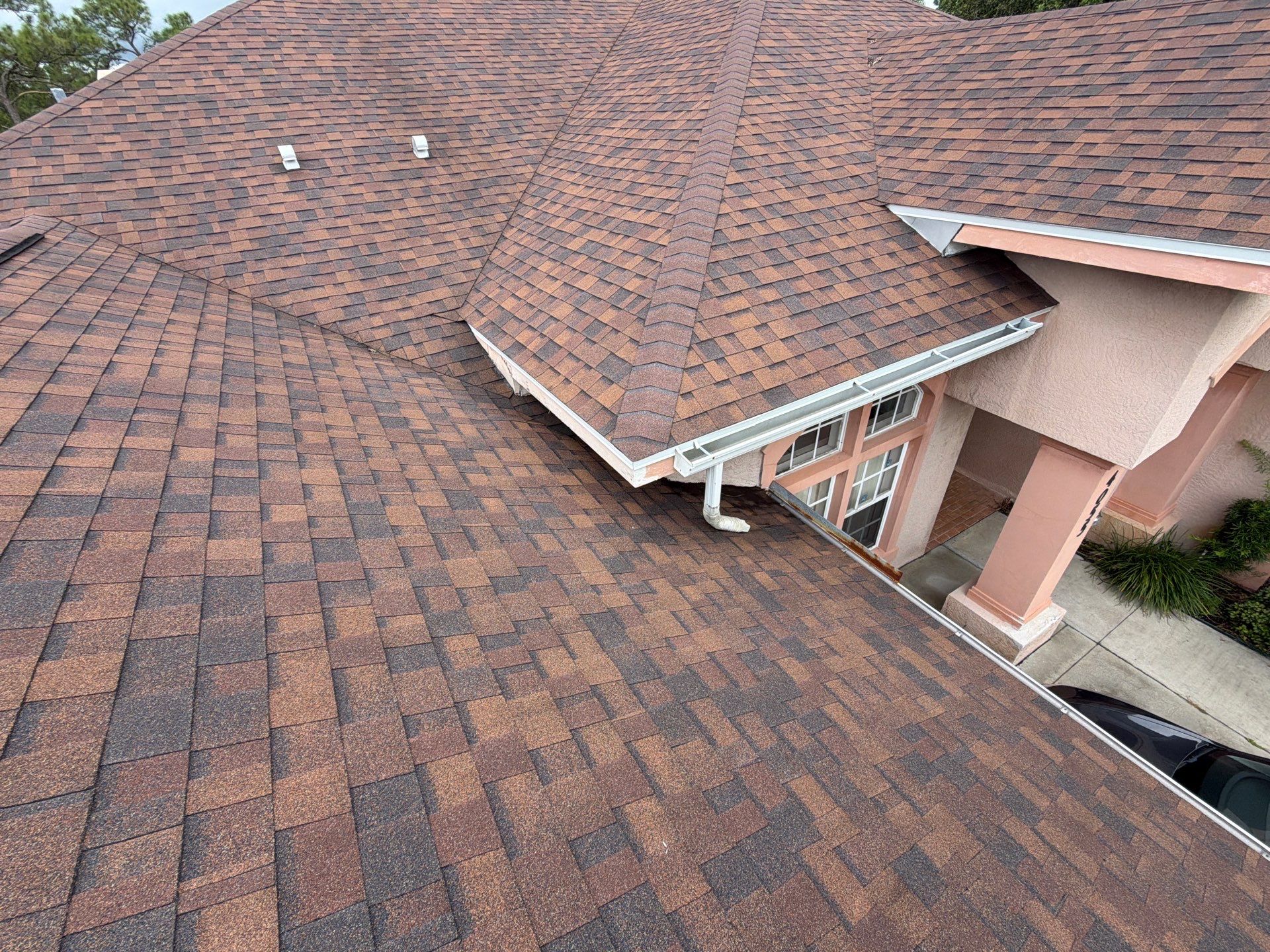
Your gutters protect your roof by catching water that runs off your shingles and carrying it away from the roof edge, fascia, soffit, and slab. When they fail, water goes where it shouldn’t, and the roof edge usually rots first.
That matters more on the Space Coast. The 2026 Atlantic season set the record for the latest first hurricane, yet a stalled front still dropped 6.96 inches of rain on Palm Bay and 5.53 inches on Melbourne between April 6 and 9, 2026. In Brevard County, rain volume is the real test your gutters have to pass.
Below, I will explain how gutters protect a Florida roof, the 8 signs you need new gutters, and when to repair, replace, or call a roofing and renovation contractor in Brevard County. We’ve been a state-certified roofing contractor (CCC1331836) and general contractor (CGC1527853) since 1980, so we know what’s in practice.
How Do Gutters Protect Your Roof?
Gutters catch water at the eave and send it to downspouts, so it never soaks the roof edge, rots the fascia board, wets the soffit, or splashes back onto your walls. On a Florida home, they also keep heavy storm runoff off your slab and out of your stucco.
Here’s what each part of that job looks like.
The Roof Edge
A metal drip edge guides runoff into the gutter. When the gutter clogs or loses its pitch, water backs up and soaks the edge of the roof deck. Wet plywood softens. Shingles nailed into it loosen.
The Fascia and Soffit
The fascia is the board your gutters hang on. The soffit is the panel under your eaves. Water spilling out the back of a gutter soaks both.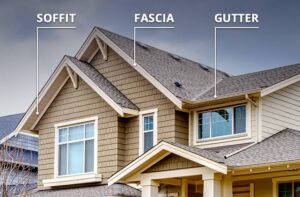
Rotten fascia can’t hold a gutter or a drip edge. Wet, sagging soffit blocks the vents that cool your attic, and a hot Florida attic cooks shingles from below. It can also put your shingle warranty at risk, since manufacturers require proper ventilation.
Fixing these usually takes two trades: roofing for the roof edge, carpentry for the wood behind it. We’re licensed for both, so one crew handles the roof edge and the fascia, soffit, or siding behind it through our renovation services.
Your Walls
Runoff pouring off an eave splashes sand and water back onto stucco, siding, screens, and windows. Stains and peeling paint follow.
Your Slab and Yard
Forget the flooded-basement warnings. Here the risk is soil washing out along the slab, water at door thresholds, and erosion in the same spot every storm.
One thing that doesn’t apply in Florida: ice dams. They dominate gutter advice online, but in Brevard the test is volume. Your gutters have to move a lot of water fast, and our residential roofing inspections check them with that in mind.
What Happens to a Florida Roof Without Working Gutters?
Without working gutters, water sheets off the eave, soaks the fascia, stains the walls, washes out soil along the slab, and pools where mosquitoes breed. It happens slowly and mostly out of sight, behind the gutter. By the time you notice, the wood is often soft.
When we tear a roof down to the deck, the fascia and deck edge behind the gutters are among the first things we check. We don’t roof over rotted wood, so if the edge is bad, we replace it first.
If you only have gutters on part of the house, check the sides that drain toward entries, the garage, and the lanai. That’s where runoff does the most damage. If water has already damaged your walls, we can replace the siding in the same project, with no second contractor to schedule.
8 Signs You Need New Gutters
You likely need new gutters if they sag, overflow in normal rain, rust or split, stain the fascia, hold water, show dents, hang on spikes, or are 20+ years old.
| Sign | What it looks like | What it usually means | Repair or replace? |
| 1. Sagging or pulling away | A dip in the run or a gap between gutter and fascia | Failed hangers, or rotted fascia behind | Replace the run; repair the fascia |
| 2. Spike-and-ferrule hardware | Round nail heads across the face of the gutter | Outdated fastening that keeps backing out | Replace with hidden hangers |
| 3. Rust, holes or split seams | Orange streaks, pinholes, drips at joints | The metal is failing | Replace if it’s more than one spot |
| 4. Overflowing in normal rain | Water sheeting over the front edge | Clogged, poorly pitched, or undersized | Clean first; replace if it still overflows |
| 5. Stains or peeling paint under the gutter | Dark streaks, black mildew, flaking paint on fascia and soffit | Water is getting behind the gutter | Fix the gutter and the wood |
| 6. Standing water | Water still sitting in the gutter a day after rain | Lost pitch | Re-pitch or replace |
| 7. Dents | Dimples along the top and face | Hail or falling limbs hit the roof edge | Have the roof checked too |
| 8. Age | 20+ years on aluminum, less on vinyl | End of service life | Plan replacement |
1. Gutters are Sagging or Pulling Away from the House
A sagging gutter has lost support. Either the hangers failed, or the fascia they screw into has rotted and can’t hold them. Gently push the fascia near the sag with a screwdriver handle. If it feels soft, the problem is the wood, and a new gutter on rotten fascia will sag again.
2. Old Spike-and-Ferrule Hardware
If you see a row of round nail heads across the face of your gutters, long spikes driven through a tube into the fascia hold them up. Florida heat and the weight of water loosen them, and each re-nailing widens the hole. Modern hidden hangers screw into sound wood and hold far better.
3. Rust, Holes, or Split Seams
Rust means the metal itself is failing, and patches only buy time. Salt air near the Indian River and on the barrier island speeds this up. Mixed metals make it worse, which is why we use stainless fasteners near the beach. Sectional gutters also leak at every joint, so watch the seams, end caps, and corners.
4. Overflowing During a Normal Florida Downpour
If water spills over the front edge in an ordinary afternoon storm, the gutter is clogged, pitched wrong, or too small. Clean it first and run a hose through it, a simple water flow test that shows leaks and slow spots. Start the hose at the end farthest from the downspout, then watch for drips at seams, water pooling in low spots, and how fast it drains out the bottom.
Then check the end cap. If a clean, properly pitched gutter still overflows, it’s undersized for your roof.
5. Water Stains, Peeling Paint, or Mildew on Fascia and Soffit
Streaks, black mildew, or peeling paint under the gutter mean water is running out the back of it and into the wood. Fixing the gutter alone won’t help if the fascia is already rotting. Fix both in the same visit. That’s simpler when one contractor is licensed for the roof and the wood behind it, just like Florida Roofing & Renovations Inc.
6. Water that Stands in the Gutter After Rain
Gutters need a slight pitch toward the downspout. When they lose it, water sits in low spots, adds weight, and breeds mosquitoes.
The Florida Department of Health in Brevard County issued a mosquito-borne illness advisory on September 3, 2026, after sentinel chickens tested positive for West Nile virus. After heavy rain in 2025, Brevard Mosquito Control specifically asked residents to clear clogged gutters. So, this standing water can become a health hazard as well.
7. Dents from Hail or Falling Limbs
Dented gutters are an easy clue you can spot from the ground. They tell you something hit the roof edge hard. Hail fell around Palm Bay on March 15, 2026, including reports near Malabar Road and I-95. If your gutters are dented, have the shingles checked too, since hail that dents metal can damage the roof.
8. Your Gutters are Near the End of Their Life
Aluminum gutters typically last around 20 years. Gutters and roofs often age out together, so if your gutters are this old, check your roof’s age with our roof age guide.
Not sure if it’s the gutter or the roof? Some of these signs point past the gutter. For example, granules piling up in the gutters can come from worn shingles. Compare what you see with these signs you need a new roof.
Try the rain walk. During the next storm, walk around the house with an umbrella. Look for water sheeting over the front of the gutter, dripping behind it, and downspouts dumping against the slab. Five minutes in the rain will tell you more than an hour on a ladder on a dry day.
How Long Do Gutters Last in Florida?
Most aluminum gutters last about 20 to 25 years, vinyl about 10 to 15, and copper 50 years or more. Near the Indian River or the beach, salt air and mixed metals can wear out fasteners and seams sooner, so check them every year.
| Material | Typical lifespan | What to watch for in Brevard |
| Vinyl | 10 to 15 years | Constant sun makes vinyl brittle; cracks at joints |
| Aluminum | About 20 to 25 years | Doesn’t rust, but corroded fasteners and failing seams near salt air |
| Steel | Varies widely | Rusts from the inside where water sits |
| Copper | 50 to 100 years | Long-lived but costly; keep other metals from touching it |
Lifespan depends as much on maintenance as on material. A clean, well-pitched aluminum gutter on solid fascia can reach the top of its range. One that holds water and debris rarely does.
Should you repair or replace your gutters?
Repair your gutters when the problem is local: a few loose hangers, one leaking seam, or a clogged downspout. Replace them when problems repeat along the run, the metal is rusting through, the fascia behind is rotted, or the system is near the end of its life.
| Repair if… | Replace if… |
| One or two hangers are loose, and the fascia is solid | Sagging shows up in several places |
| A single seam or end cap drips | Seams leak along the whole run, or metal is rusting through |
| A downspout is clogged or disconnected | The gutter overflows even when clean and pitched right |
| Damage came from one event, like a fallen branch | The gutters are 20+ years old and need repairs every season |
| The fascia is sound | The fascia behind is soft, so the gutters have to come off anyway |
As both a roofing and general contractor, we can put roof, fascia, soffit, and siding repairs in one contract, so you’re not coordinating a roofer and a carpenter.
Metal costs more this year. One major gutter-accessory maker raised aluminum, stainless, copper, and fastener prices about 7 to 9% on March 2, 2026, and tariffs are pushing raw-material prices up. Even so, patching a failing system every season usually costs more than replacing it once.
Should You Replace Gutters When You Replace Your Roof?
In most cases, yes. The gutters come off during tear-off anyway. That’s the moment the fascia is fully exposed, rot can be fixed, and new gutters can be lined up with the new drip edge. Rehang 20-year-old gutters on a new roof, and you’ll pay for a second job soon.
There’s a deadline worth knowing, too. The Florida Building Code 9th Edition takes effect December 31, 2026, and projects permitted before then generally fall under the current 8th Edition. If you’re reroofing this year, put the gutters and fascia in the same plan.
To budget, start with the cost of a new roof in Brevard. If you’re weighing materials, look at Gulf Coast metal roofs, which shed water fast and pair well with properly sized gutters.
Gutters, Roof-Edge Damage and Your Florida Insurance
Insurers usually cover sudden storm damage, but fascia rotted by years of overflow is usually your bill.
It also matters if you’re shopping for coverage. In September 2026, regulators approved rate cuts of up to 10.4% on more than 62,000 policies, and Citizens urged homeowners to compare options. A new carrier may look at your roof, and a sound roof edge helps. Policies vary, so check yours.
Gutter Checks for Palm Bay, Melbourne and Grant-Valkaria homes
Check your gutters at least twice a year in Brevard County: before hurricane season starts June 1 and after it ends November 30. Add a quick look after any big storm or heavy leaf drop.
- Palm Bay: Many homes here are decades old. Check the fascia first. After nearly 7 inches of rain in four days this April, you know how much water your gutters handle.
- Melbourne and beachside: Salt air attacks fasteners, hangers, and seams. Look for corrosion at screws and corners.
- Grant-Valkaria: Heavy tree cover clogs gutters faster, and long runs mean more downspouts to keep clear.
- All of Brevard: Mosquito season runs roughly April through October, so fix the pitch.
A quiet hurricane season isn’t a reason to skip this. Brevard still got heavy rain and hail in 2026.
When to Call a Roofer & Remodeler Instead of a Gutter Cleaner
Call a roofer and a remodeler if you see soft or stained fascia, sagging soffit, leaks near exterior walls, granules piling in the gutters, or water running behind the gutter. Those are roof-edge problems. A gutter cleaner won’t inspect them.
We’ve worked on Florida roofs and houses since 1980, and we’ll tell you straight whether you need a repair, new gutters, or more. We’ll show you what we find by photo, video, or FaceTime.
Get a roof and roof-edge inspection with Florida Roofing & Renovations Inc. Call 321-914-3360.
Frequently Asked Questions
What size gutters do Florida homes need?
Five-inch K-style is the standard residential size and fits most single-story Brevard homes. Large or steep roofs, long runs, and valleys that dump into one spot often need 6-inch gutters and bigger downspouts.
Are seamless gutters better than sectional?
Usually, yes. Seamless gutters are formed on site, so the only joints are at corners and downspouts. Sectional gutters have a joint every few feet, and every joint is a future leak.
Are gutter guards worth it in Brevard County?
Under oaks and pines, they help. But guards reduce cleaning; they don’t end it. Pick one that lets heavy rain in instead of sheeting it over the edge, and only put them on gutters in good shape.
Can I clean my own gutters?
On a single-story home with clear access, yes, from a stable ladder on a dry day. Two stories or heavy tree cover? Hire a pro. Never walk a wet roof.
Will insurance pay for storm-damaged gutters?
Sudden storm or hail damage may be covered, minus your deductible. Photograph dents and loose sections before cleanup. Have the roof checked too, since hail that dents gutters can damage shingles.
Do gutters affect my wind mitigation discount?
No. Florida’s wind mitigation form, revised for inspections from April 1, 2026, rates features like roof covering, deck attachment, roof-to-wall connections, and opening protection. Gutters aren’t on it.
Can loose gutters damage my roof in a hurricane?
Yes. A loose run can catch wind, tear off, and take the drip edge with it, exposing the roof edge to wind-driven rain. Tighten or remove any section that wobbles before a storm.
Where should my downspouts drain?
Onto the lawn or a splash block, several feet from the slab. Not onto the driveway, against the foundation, or toward a neighbor. A cheap extension stops sand from washing out at the corners of the house.

