
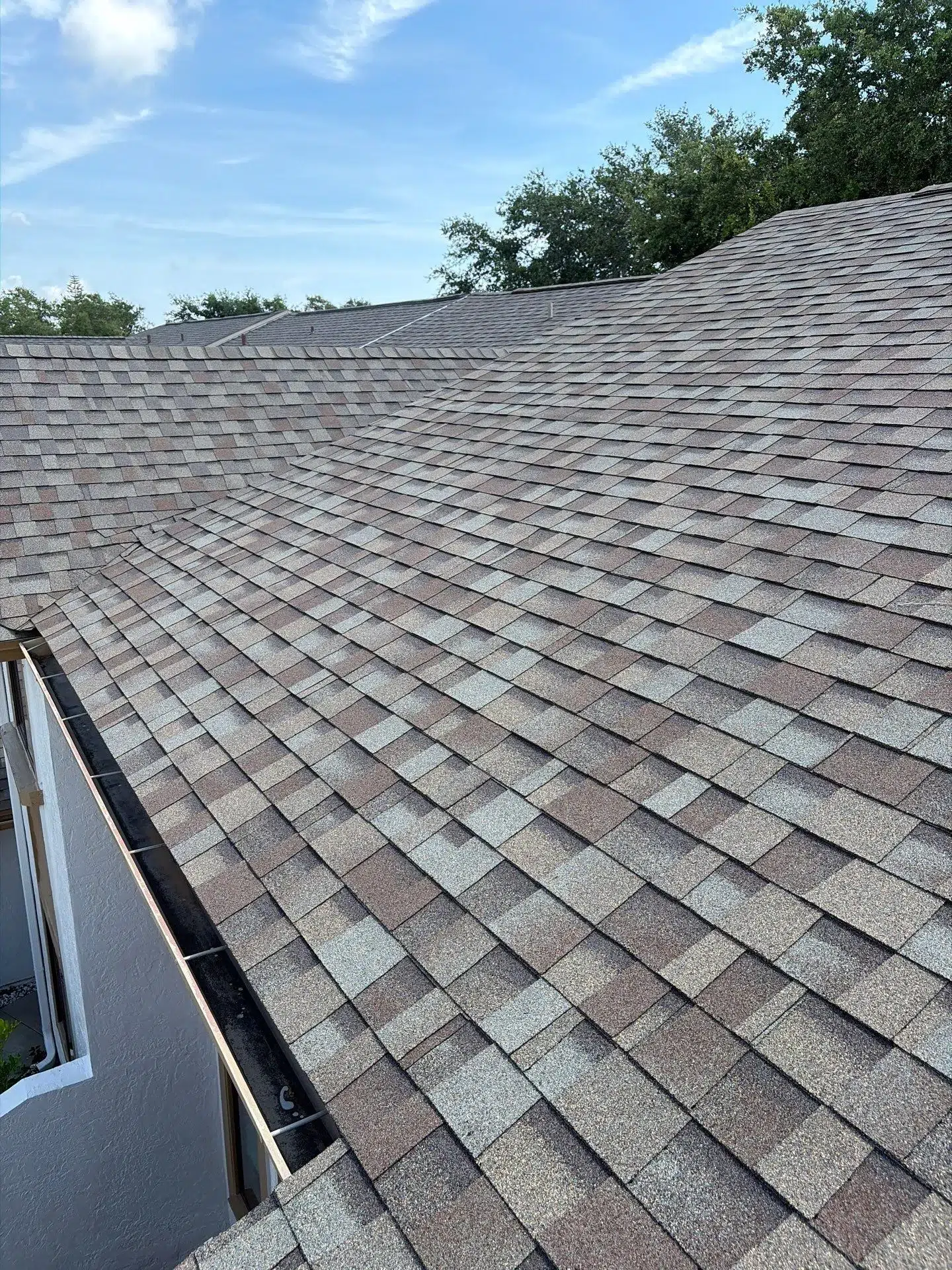
How often you need a roof inspection in Palm Bay comes down to one answer: twice a year — once in spring before hurricane season kicks off, and once in fall after it’s over. If your roof is newer, you can get away with once a year plus a check after any bad storm. If it’s over 10-15 years old, or you’re closer to the river or the beach, stick with twice a year.
That’s your answer, but below we will also explain the “why,” the exceptions, and what happens when someone gets up on your roof for inspection.
Why Palm Bay Roofs Take More Abuse Than Most
You don’t need us to tell you Florida sun is brutal. Here’s what that brutal sun does to a roof: UV rays cook the asphalt in your shingles, drying them out and stripping the little granules that protect them. You’ve probably seen that gritty black sand in your gutters – that’s your roof shedding its own sunscreen.
Then there’s the afternoon monsoon. Every summer day around 3 PM, your roof goes from 150+ degrees in direct sun to a cold soak in about twenty minutes. Do that daily for months and materials expand, contract, and eventually crack or separate. Roofers call it thermal shock.
Add in the humidity that never really leaves (hello, algae and mold on anything organic), and hurricane season stacked on top of all of it, and you’ve got a roof that’s working a lot harder here than it would in, say, Georgia or the Carolinas.
One more Palm Bay-specific factor: where you sit matters. If you’re closer to the Indian River Lagoon or you’re heading over the bridge toward the beach side, salt air is chewing on your flashing, fasteners, and any exposed metal faster than it would for a house further inland off 95. If that’s you, lean toward the more frequent end of every schedule in this guide.
If you’re already seeing warning signs – curling shingles, stains on the ceiling, granules piling up – don’t wait for the “right” season. Check out our guide to the signs you need a new roof, and get someone out there now.
The Palm Bay Roof Inspection Schedule, By Age
Let this be your cheat sheet. Print it, screenshot it, whatever works.
| Roof Age | How Often to Inspect |
|---|---|
| 0-5 years | Every 1-2 years, plus a check after any major storm |
| 5-10 years | Once a year |
| 10-15 years | Twice a year (spring and fall) |
| 15+ years | Twice a year, and keep every report (you’ll want it for insurance) |
Newer doesn’t mean bulletproof. A roof that’s two or three years old can still have an installation mistake that doesn’t show up until the first real storm tests it. That’s why even a young roof deserves a look now and then.
Once you cross the 10-year mark, wear starts compounding faster than most homeowners expect. If you’re trying to figure out where your roof sits in its lifespan and whether repair or replacement makes more sense, our roof age and replacement guide walks through that in plain terms.
Best Time of Year to Get Your Roof Checked
Spring (April-May): Get Ready to Take a Hit
This is the “before” inspection. Hurricane season officially starts June 1, and the goal here is simple: find anything that could turn into a bigger problem once the wind starts blowing.
A spring inspection should cover:
- Loose shingles or tiles that could lift in high wind
- Flashing around chimneys, vents, and skylights
- Sealant around penetrations that’s dried out over the winter
- Gutters – are they attached tight, or barely hanging on?
Anything found here gets fixed before June. Once storm season is underway, good roofers get booked out fast, and you’ll be on a waitlist for a few weeks.
Fall (November-December): See What the Season Left Behind
Hurricane season wraps up November 30. Even if Brevard didn’t take a direct hit, months of afternoon storms and tropical systems passing offshore still put stress on your roof. This inspection is about finding what’s hiding.
A fall inspection should cover:
- Shingles that lifted in the wind and reseated, but didn’t reseal
- Granule loss in the gutters (a sign of accelerated wear)
- Soft spots in the decking from moisture that snuck in
- Debris buildup in valleys that traps water
Important Note: Florida gives you one year from a storm’s landfall date to file an initial hurricane or windstorm damage claim, and 18 months for supplemental claims. If a system rolled through and you never got the roof looked at, that clock is still running whether you’re paying attention or not. So, get it checked and documented, and you’ll know exactly where you stand, instead of finding out about a leak six months later. (Confirm current deadlines with your insurance agent, since these rules can shift.)
If storm damage does turn up, our roof repair cost guide for Palm Bay gives you a realistic idea of what you’re looking at before anyone gives you a quote.
Inspection Frequency By Roof Type
The material you’ve got changes how often it needs eyes on it.
| Roof Material | Inspect Every | What We’re Watching For |
|---|---|---|
| Asphalt shingles | 6-12 months | Curling, cracking, granule loss – the most common roof type in older Palm Bay neighborhoods, and the fastest to wear out in FL heat |
| Metal roofing | 1-2 years | Fastener corrosion, loose panels, rust starting near coastal areas |
| Clay/concrete tile | 1-2 years | Cracked or slipped tiles, and the underlayment underneath, which usually fails before the tile does |
| Flat/low-slope roofs | Every 6 months | Ponding water – the #1 killer of flat roofs, common on additions, porches, and commercial buildings |
If you’re on an older Port Malabar-era home, there’s a decent chance you’re on asphalt shingles and closer to that 6-month end of the range. If you’ve got a newer metal roof, you can breathe a little easier, but “durable” doesn’t mean “never check it.”
Do You Really Need an Inspection After Every Storm?
Yes. Even if nothing looks wrong from your driveway.
Here’s the thing about wind damage – it’s sneaky. A shingle can lift, then lay back down without resealing. From the ground, it looks fine. Underneath, water’s got a straight shot to your decking, and it’ll keep finding its way in every time it rains until someone catches it.
Rule of thumb: any storm with sustained winds over about 50 mph, or any hail, is worth a look.
Here’s a smart move for you as well – get your roof photographed and documented before hurricane season even starts. If a storm does cause damage later, you’ve got proof of what your roof looked like beforehand. That matters because insurance adjusters have been known to try to chalk up storm damage to “pre-existing wear” – a documented pre-season inspection makes that a lot harder to argue.
What Happens During a Roof Inspection in Palm Bay, FL
If you’ve never had one done, here’s the rundown.
Outside: We check the shingles, tiles, or metal panels for damage. Flashing around chimneys, vents, and skylights. The drip edge. Gutters and downspouts, and whether they’re clear and securely attached.
Inside (the attic): We’re looking at ventilation, checking the decking for sagging or soft spots, and looking for water stains or mold that hasn’t made it to your ceiling yet. A roof can be leaking for a while before you ever see it from inside the house.
The report: You get a written summary – what we found, photos, and a straight answer on whether it’s a minor fix or something bigger.
5 Signs You Shouldn’t Wait for Your Next Scheduled Inspection
Some things don’t care what season it is. If you notice any of these, call sooner rather than later:
- Granules piling up in your gutters – your shingles are shedding their protective layer faster than normal.
- Curling or cupping shingles – the edges lifting or the middle bowing means the material’s drying out and getting brittle.
- Water stains on ceilings or walls – by the time you see this, the insulation above it is probably already soaked.
- A sagging roofline – visible from the street, this usually means structural trouble, not a cosmetic issue.
- Daylight in the attic – turn off the lights up there on a sunny day. If you see pinholes of light, water can get in through the same spots.
How Inspections Affect Your Florida Homeowners Insurance
Florida insurance companies care a lot about roof age and condition these days, probably more than you’d like. Most carriers require what’s called a 4-point inspection before they’ll write a new policy, which covers your roof, electrical, plumbing, and HVAC.
Here’s something worth knowing if your roof is getting up there in years: Florida law generally prevents an insurer from refusing to renew your policy based on roof age alone, as long as a licensed inspection shows the roof still has at least five years of useful life left. That’s a real protection, but it only works if you’ve got the paperwork.
Regular inspections build a paper trail. If you ever need to file a claim, having a history of maintained, documented roof condition makes that process a lot smoother and makes it a lot harder for anyone to deny a claim by blaming “neglect.”
Before you sign anything with a roofer, by the way, it’s worth knowing what’s required to be in a legitimate Florida roofing contract, so pay attention to details.
Note: Insurance regulations do get updated – always confirm current requirements with your agent before you rely on this.
DIY Roofing Inspections vs. Calling a Pro
Walking your yard and looking up is a fine habit. You can spot missing shingles, obviously clogged gutters, or a branch that’s about to come down on your roofline. Do that after every storm – it costs you nothing and takes five minutes.
What you can’t do from the ground: check fastener tightness, feel for soft decking, measure moisture levels under the surface, or get a real look at your flashing and underlayment. That stuff requires someone who knows where to step and what to look for – and honestly, climbing around on a roof without knowing what you’re doing is how people get hurt or crack a tile that was otherwise fine.
What Does a Roof Inspection Cost in Palm Bay, Florida?
A professional inspection is a small expense compared to what you’re protecting. It’s nowhere close to the cost of a surprise leak, rotted decking, or a full roof replacement you could’ve seen coming.
Reach out, and we’ll give you a clear number. We’re local roofing contractor in Brevard county, we know what Palm Bay roofs are up against, and we’ll give you a straight answer.
FAQ: Roof Inspections in Palm Bay, Florida
What’s the best month to get a roof inspection in Palm Bay?
April or May, before hurricane season starts June 1. Then again in November or December, once the season’s over, to check for anything it left behind.
Do I need a roof inspection before selling my home in Florida?
Yes, since buyers and their insurers look closely at roof age and condition here. A good inspection report ahead of listing can prevent a last-minute renegotiation.
How long does a roof inspection take?
Usually 45 minutes to an hour for a typical residential roof, depending on size and how complicated the roofline is.
Do I need to be home during the inspection?
You don’t have to be, but it helps. If you’re there, we can walk you through what we find on the spot and, if needed, get access to the attic.
Can a drone inspection replace an in-person one?
Not fully. Drones are great for getting a wide view of hard-to-reach spots, but they can’t lift a shingle to check the seal underneath or feel for a soft spot in the decking. Good tool, not a replacement for hands-on eyes.
How soon after a hurricane should I get my roof inspected in Brevard County?
Within a few days if possible. Hidden wind and water damage doesn’t wait around, and the sooner you catch it, the smaller the repair.

