
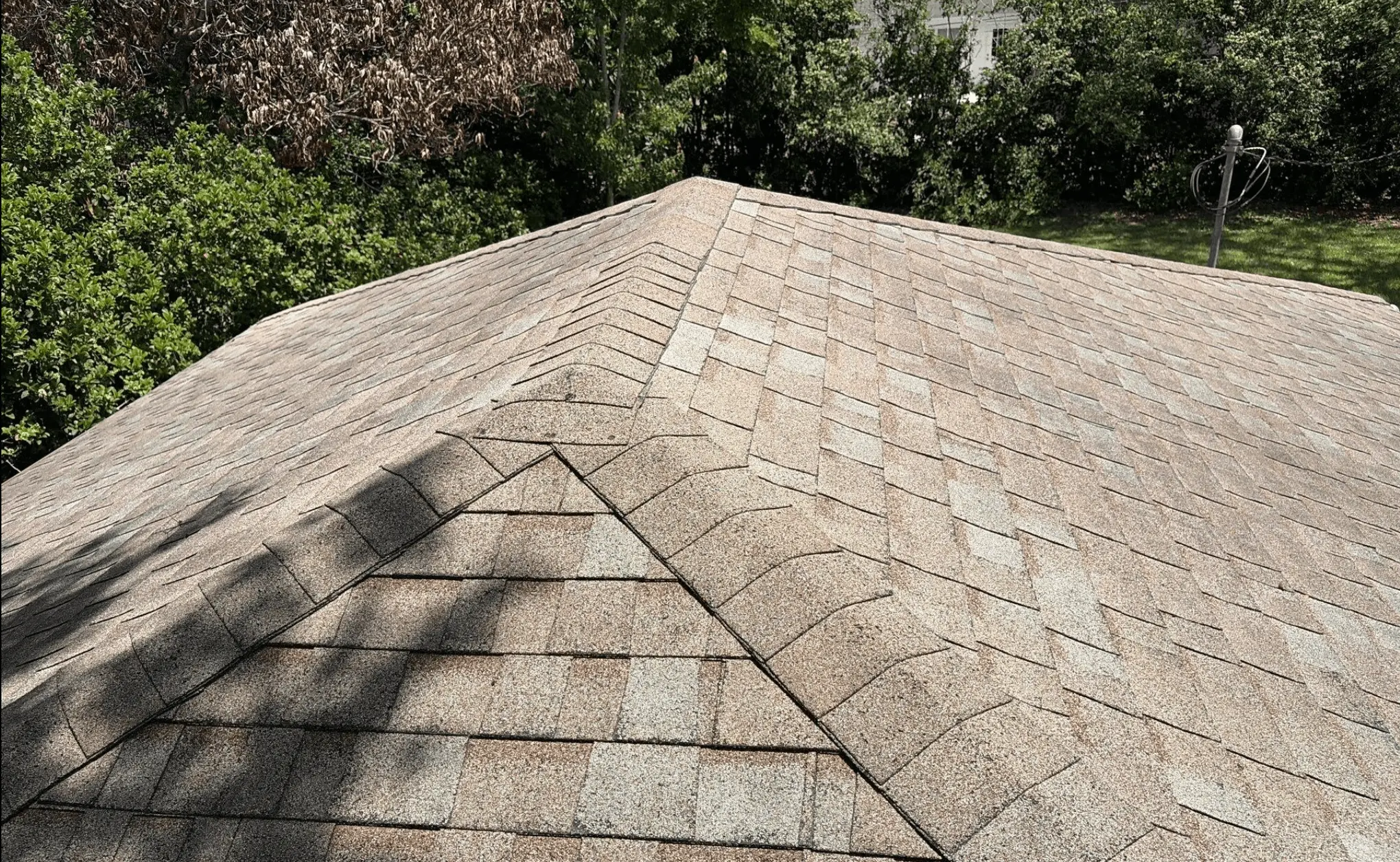
Palm Bay doesn’t really have four seasons. It has two: hurricane season and the rest of the year. If you build your roof maintenance around that reality instead of some generic “spring cleaning” checklist written for a house in Ohio, you’ll catch problems early, keep your insurance company happy, and skip the panic call to a roofer three days before a storm makes landfall.
Below is the full seasonal roof maintenance checklist for Palm Bay, Florida, homes, organized as it plays out on the Space Coast calendar.
The Palm Bay Roof Maintenance Calendar at a Glance
| Season | Timing | What to Do | DIY or Pro |
| Pre-Storm Prep | May-June | Roof inspection, gutter clean-out, tree trim, flashing check | Mix |
| Hurricane Season | June-November | Post-storm visual checks, attic checks, damage documentation | Mostly DIY |
| Post-Storm Recovery | November-December | Debris removal, algae treatment, flashing repair | Mix |
| Dry Season Maintenance | December-May | UV damage check, sealant refresh, professional inspection, plan any repairs | Mix |
If you only remember one thing from this article, remember this: the work you do in May decides how your roof handles October.
Why Palm Bay, Florida Roofs Play by Different Rules
Ice and snow load aren’t your problem here. Your roof deals with three things almost nobody else’s does at this intensity: relentless UV, salt air off the river and the beach, and tropical storms rolling in from June through November.
Here is a simple fact that many people don’t know and should – Palm Bay is not in Florida’s High Velocity Hurricane Zone. It is a term used for Miami-Dade and Broward counties, where codes are most strict in the whole state.
However, Brevard County follows a different set of standards, yet if you live a mile from the shoreline, you are still in the wind-borne debris area of Florida, which is characterized by high design wind speeds and takes flying debris into account in the code.
This simply means that your roof doesn’t need Miami-Dade-grade everything, but it absolutely still needs to be built and maintained to handle real hurricane wind
A lot of Palm Bay homes from the ’70s through the ’90s are still running original 3-tab shingles that are well past their design life… if you’re not sure where your roof stands, it’s worth figuring that out before you rely on it during a storm. Florida Roofing and Renovation Inc. has been on enough Palm Bay roofs to tell you in one visit. Either way, if you’re not sure where your roof stands, it’s worth figuring that out before you rely on it during a storm. We wrote a whole breakdown of the signs your roof is telling you it’s done if you want to check yourself against it.
Pre-Storm Checklist: Get This Done Before June 1
This is the window that actually matters. Everything else on this list is maintenance. This is prep.
1. Get a professional roof inspection
A licensed roofer checks flashing, fasteners, underlayment condition, and ridge caps – the stuff that fails first under real wind. If it’s been a couple of years since your last one, don’t skip this. Book it in May, not June, because every roofer on the Space Coast gets slammed the closer we get to hurricane season.
2. Clean out your gutters and downspouts, all the way
A clogged gutter during a heavy tropical downpour pushes water back up under your shingles instead of away from your house. Single-story home, clear tree cover – do it yourself; it’s a Saturday morning job. Two stories or heavy oak/pine overhang, call a pro; it’s not worth the fall risk.
3. Trim anything within 10 feet of your roofline
Flying branches are one of the top causes of roof damage in a storm, and insurance adjusters aren’t shy about pointing to an obviously neglected tree as a reason to push back on a claim. Ground-level pruning, do it yourself. Anything needing a chainsaw, height, or work near power lines – pro job.
4. Check your pipe boots and flashing
The rubber boots around your vent pipes dry out and crack in about 7-10 years under the Florida sun, and it’s one of the most common sources of leaks we see. You can check this visually from a ladder at gutter height. The replacement is a pro job.
5. Secure everything attached to your roof
Satellite dishes, solar panels, turbine vents, loose gutter sections, and anything mounted on your roof can rip shingles or tiles loose if it comes free in high wind.
6. Know your roof type’s weak spot.
- Shingle: curling or lifted edges, exposed nail heads, ridge cap seal.
- Tile: cracked or slipped tiles, but the real risk is usually the underlayment underneath, which can fail long before the tile looks bad.
- Metal: panel fasteners and edge/drip flashing. If you’re weighing a metal roof for the wind performance, take a look at what Gulf Coast metal roofing options look like for this climate.
7. Review your homeowner’s insurance policy
Confirm your roof’s age is on file correctly, check whether you qualify for a wind mitigation discount, and know your hurricane deductible before you need it, not after.
8. Take dated photos of your roof and attic now
Baseline documentation, before any storm hits. This might be helpful in case you need to make a claim – this is how storm damage differs from a pre-existing condition for an insurance adjuster.
If your roof was lacking anything from the above list, then our residential roofers take care of everything, from repairing flashing to tearing off and installing a new roof – doing it in May is preferable to doing it in an emergency in September.
During Hurricane Season: What to Watch (June-November)
Once storm season is underway, maintenance turns into monitoring. You’re not doing major work here. You’re catching problems early enough that they stay small.
- Do a ground-level check after every named storm or serious wind event. Binoculars from the yard, not a walk on the roof – wet shingles and tiles are dangerous, and it’s not worth it.
- Check the attic after heavy rain. Water staining, damp insulation, or light coming through the decking are your earliest warning signs, well before you’d ever see a ceiling stain.
- Photograph anything unusual immediately, before you clean it up. In Florida’s claims environment, timestamped photos are worth more than a phone call describing what you saw.
- Know the difference between “this can wait” and “call for a tarp now.” A few lifted shingles can wait for a scheduled repair. Exposed decking or an active leak can’t.
Post-Storm and Dry Season: Recovery and Real Repairs (December-May)
Once the season winds down, this is your window to fix things and get ahead of next year.
Clear out anything that piled up. Palm fronds, seed pods, leaf litter – all of it holds moisture against your roof if you leave it.
Get rid of moss, algae, or other dark spots on your roof. This black spot on the roof, common in Florida, is an algae that grows well in the humid climate of Florida. The proper treatment is a low-pressure rinse,
Don’t go for a pressure washer. It strips the protective granules off asphalt shingles, and once those are gone, they’re gone. It’ll make your roof look better for about a month and then shorten its lifespan.
Refresh sealant around skylights, pipe boots, and chimney flashing. Florida UV is brutal on sealant, and this is cheap, easy insurance against next year’s leaks.
Check attic ventilation. Blocked ridge or soffit vents trap heat in your attic, and that heat cooks your shingles from underneath – it’s a bigger deal here than almost anywhere else in the country.
Schedule any bigger repair or replacement work now. This is the calm window. Contractors aren’t slammed, the weather’s more predictable, and you’re not racing a storm.
What to Check Inside the House for Roof Maintenance
Your attic and ceilings usually tell you about a roof problem before the roof itself does. Walk through and check for:
- Brown, yellow, or rust-colored ceiling stains
- Staining or streaking on attic rafters or sheathing
- Soft or spongy fascia boards
- A musty attic smell, even with no visible staining
- Daylight coming through the attic decking
Any one of these means it’s time for an inspection, not a wait-and-see approach.
Maintenance, Repair, or Replace? Here’s How to Tell
At some point, every roof crosses a line where fixing it costs more, long-term, than replacing it. Here’s how to know where you stand:
- Shingle roofs generally last 15-25 years depending on the material and how much sun exposure they’ve taken. Once you’re in that range, weigh each repair against what replacement would cost instead of treating it as a one-off.
- Widespread granule loss in your gutters, year after year, means the UV-protective layer is gone across the whole roof. No maintenance step brings that back.
- A leak that keeps coming back at the same spot even after repair usually points to a deck or installation issue underneath.
- Staining that returns after a repair means the original problem wasn’t fully fixed the first time.
If you just need something fixed, here’s what common repairs run in this market. And if you need a new roof, check the new roof prices in Palm Bay to be prepared.
DIY vs. Professional Maintenance: Where the Line Is
| You Can Do This Yourself | Call a Pro for This |
| Ground-level visual inspection | Walking the roof to inspect it |
| Single-story gutter cleaning | Two-story or heavy-overhang gutter work |
| Attic interior checks | Any flashing repair |
| Ground-level debris removal | Pipe boot replacement |
| Algae treatment (low-pressure method) | Tile underlayment assessment |
| Spotting interior stains | Any leak requiring roof access |
| Ground-level tree pruning | Chainsaw work, height, or near power lines |
| Baseline photo documentation | Wind mitigation or 4-point inspection |
The Bottom Line
None of this is complicated. Get your roof looked at before hurricane season, keep an eye on it while storms roll through, and use the calm months to fix what needs fixing and treat what’s growing on it. Do that every year, and you’ll get the full lifespan out of your roof instead of finding out the hard way what you missed.
If you want a second set of eyes on your roof, contact us and let’s see what we can do for it.
FAQ: Palm Bay Roof Maintenance
How often should you inspect your roof in Palm Bay, FL?
Twice a year at minimum – once before hurricane season in May or June, and once after, in the fall or winter. If your roof is over 15 years old or you’ve got heavy tree overhang, check it more often.
When should you prep your roof for hurricane season?
Before June 1, when Atlantic hurricane season officially starts. May is the sweet spot – contractors are still booking normally, and you’re not racing a storm on the radar.
What damages a Florida roof the most – sun, rain, or wind?
All three, but UV is the quiet one people underestimate. Constant sun exposure dries out sealant and breaks down shingle granules year-round, while wind and rain do their damage in concentrated bursts during storms.
Does homeowners insurance cover roof damage from lack of maintenance?
No. Sudden storm damage is typically covered. Damage that resulted from something you knew about and didn’t fix, a known leak, missing shingles left unrepaired for months, usually isn’t. Keep records of your maintenance and inspections; it’s your best protection if a claim ever gets questioned.
What’s the 25% roof replacement rule in Florida?
Once repairs cover more than roughly a quarter of your roof’s total surface within a set period, Florida building code can require a full replacement instead of continued patch repairs. It’s meant to stop roofs from being pieced back together indefinitely.

