5 Common Roofing Scams and How to Avoid Them
5 Common Roofing Scams and How to Avoid Them. Roofing scams are all too common, leaving homeowners vulnerable and out of pocket. Discover the top five scams and how to protect yourself effectively. In Florida, certain roofing scams are more common than others due to our unpredictable weather and severe storms. You can bet that when we receive hail or hurricane damage, the storm chasers will come knocking. At Florida Roofing and Renovations, we are members of the BBB, and we want to make sure homeowners are educated on how to spot the most common roofing scams from storm chasers, door-to-door scammers, roofing insurance companies, and unlicensed roofing contractors.
Understanding the 5 Common Roofing Scams and How to Avoid Them
1. The Storm Chasers
Roofing scams can take many forms, preying on homeowners who often lack the technical knowledge to identify fraudulent activities. One prevalent scam is the “storm chaser” tactic. After a severe weather event, these scammers will knock on doors, claiming to have noticed roof damage that requires immediate attention. They often create a sense of urgency, pressuring homeowners to sign a contract on the spot. The work, if completed at all, is usually subpar, leaving the homeowner with a poorly repaired roof and a lighter wallet.
2. Fake Damage
Another common roofing scam involves the “mystery damage” approach. Here, scammers will conduct a free inspection and then fabricate or exaggerate damage reports. They might show you photos of damage that isn’t even from your roof or point out minor issues that don’t actually require urgent repair. This tactic relies on the homeowner’s lack of roofing knowledge and trust in the so-called professional’s expertise.
3. Low Estimate
The “too good to be true estimate” or “low-ball estimate” scam is a classic trick used by unscrupulous contractors. They offer a quote significantly lower than other contractors’, which can be very tempting for budget-conscious homeowners. However, once the job begins, they will encounter “unforeseen issues” that dramatically increase costs. By the time the homeowner realizes they’re being scammed, they may have already invested too much to back out.
4. High-Pressure Sales
Scammers often employ high-pressure sales tactics to coerce homeowners into making hasty decisions. They might claim that their offer is only good for a limited time or that they have a special deal that’s about to expire. These tactics are designed to prevent you from doing your due diligence.
Another tactic is the “bait-and-switch.” The contractor may initially offer a low estimate to secure the job, but once work begins, they claim that more extensive repairs are needed. This can significantly inflate the final cost, leaving the homeowner stuck with an unexpected bill. Scammers also often use scare tactics, telling homeowners that their roof is in imminent danger of collapsing or that they risk severe water damage if repairs aren’t made immediately. This fear-mongering is designed to rush you into a decision without seeking a second opinion. Always take the time to verify claims before proceeding with any work.
5. Large Upfront Payments
Another red flag is the demand for a large upfront payment. Scammers often ask for a substantial down payment before any work is done, only to disappear once they’ve received the money. A reputable contractor will have no problem with a reasonable payment schedule tied to project milestones. Additionally, vague or incomplete contracts should raise alarms. If the contract lacks detailed descriptions of the work to be done, the materials to be used, or the timeline for completion, it’s a sign that the contractor may not be planning to follow through. Always insist on a comprehensive, written contract before any work begins.
Red Flags to Watch Out For
Being able to identify red flags can save you from falling victim to a roofing scam. One major warning sign is unsolicited offers. If a contractor shows up at your door uninvited, especially after a storm, be cautious. Legitimate roofing companies typically don’t need to go door-to-door to drum up business.
Roofing Storm Chasers are contractors who only come to sell roofs after a storm, or who chase storms to find homeowners who have suffered roof damage. They actually have apps on their phones to assist them in canvassing or scamming in the neighborhoods. These contractors do this in order to make a quick profit at the expense of local homeowners.
Steps to Verify a Roofing Contractor
- Look for or ask for licensed numbers for the type of work being claimed.
- Ask to see a copy of their workers’ comp and general liability insurance.
- Check if they are members of the BBB or the local chamber of commerce.
- They should come in a business truck stating their company name.
- Check if they are local and not on the other side of the State. Or out of state.
Importance of Written Contracts
A written contract is your best defense against roofing scams. It serves as a legal document outlining the scope of work, materials to be used, timeline for completion, and payment schedule. This level of detail ensures that both parties have a clear understanding of the project, reducing the likelihood of misunderstandings or disputes. Make sure the contract includes specific details about the materials to be used. Generic terms like “roofing materials” are too vague and leave room for the contractor to use substandard products. Insist on brand names and product specifications to ensure you’re getting the quality you expect.
The contract should also outline the payment schedule. Be wary of contractors who demand a large upfront payment. A typical payment plan might involve an initial deposit, followed by incremental payments tied to project milestones, and a final payment upon completion. This ensures that you only pay for work that has been satisfactorily completed.
Tips for Getting Multiple Quotes
One of the best ways to protect yourself from roofing scams is to get multiple quotes. This allows you to compare prices, services, and the professionalism of different contractors. Be wary of quotes that are significantly lower than the others; this could be a sign of a scam or subpar work. When requesting quotes, provide each contractor with the same detailed description of the work you need. This makes it easier to compare the quotes on an apples-to-apples basis. Ask each contractor to include a breakdown of costs, including labor, materials, and any additional fees.
Take the time to meet with each contractor in person. This gives you the opportunity to ask questions, gauge their professionalism, and get a sense of their expertise. Use this time to discuss any concerns you have and to verify their credentials. A reputable contractor will be happy to provide the information you need to make an informed decision.
Resources for Reporting Roofing Scams
Reporting roofing scams is crucial for protecting other homeowners and holding scammers accountable. Start by filing a complaint with your state’s licensing board. The Department of Business and Regulation DBPR has the authority to investigate the contractor and take disciplinary action if necessary. You can also report the scam to the Better Business Bureau (BBB). The BBB keeps a record of complaints against businesses and can mediate disputes between consumers and contractors.
Your complaint may also help other homeowners avoid falling victim to the same scam or contractor. Additionally, consider reporting the scam or contractor to the local chamber of commerce, as these organizations can provide resources and support for recovering your losses and may pursue legal action against the scammer. Sharing your experience on online review platforms can also warn others about the dishonest contractor.
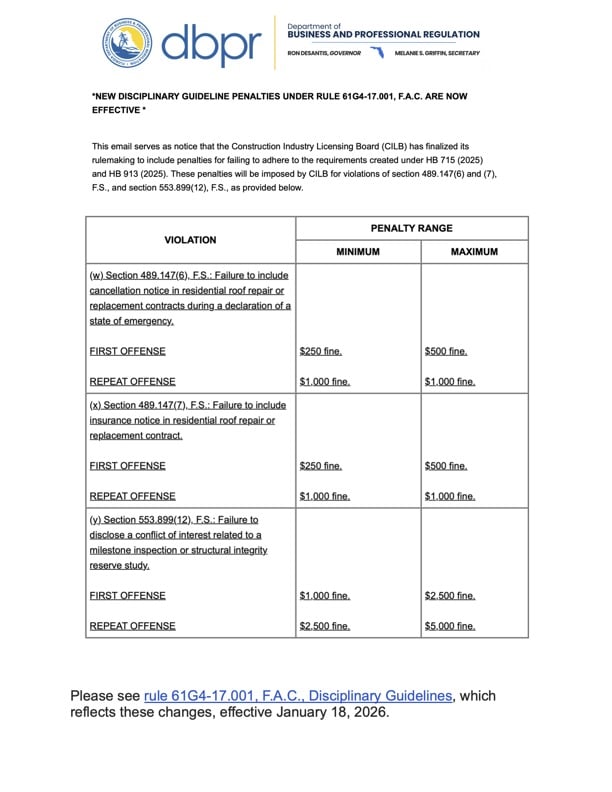
Update: Effective January 18, 2026
DBPR issued new guidelines for contracts to protect homeowners. See Below.
Conclusion: For 5 Common Roofing Scams and How to Avoid Them
Staying informed and vigilant is your best defense against roofing scams. By understanding common types of scams, recognizing red flags, and taking the necessary steps to verify contractors, you can protect yourself from falling victim to fraud. Insist on written contracts, get multiple quotes, and utilize the legal protections available to you.
Remember, a reputable contractor will welcome your questions and be transparent about their credentials and the project details. Don’t be rushed into making a decision; take the time to do your due diligence. By staying informed and cautious, you can ensure a successful roofing project and safeguard your investment. And if honest mistakes were made, reputable contractors will work with the homeowner and make things right to the best of their abilities.
If you do encounter a scam, report it to the appropriate authorities to help protect other homeowners. Your vigilance can make a difference. Armed with the knowledge and resources outlined in this article, you can confidently navigate the process of hiring a roofing contractor and enjoy the peace of mind that comes with knowing your home is in good hands.