
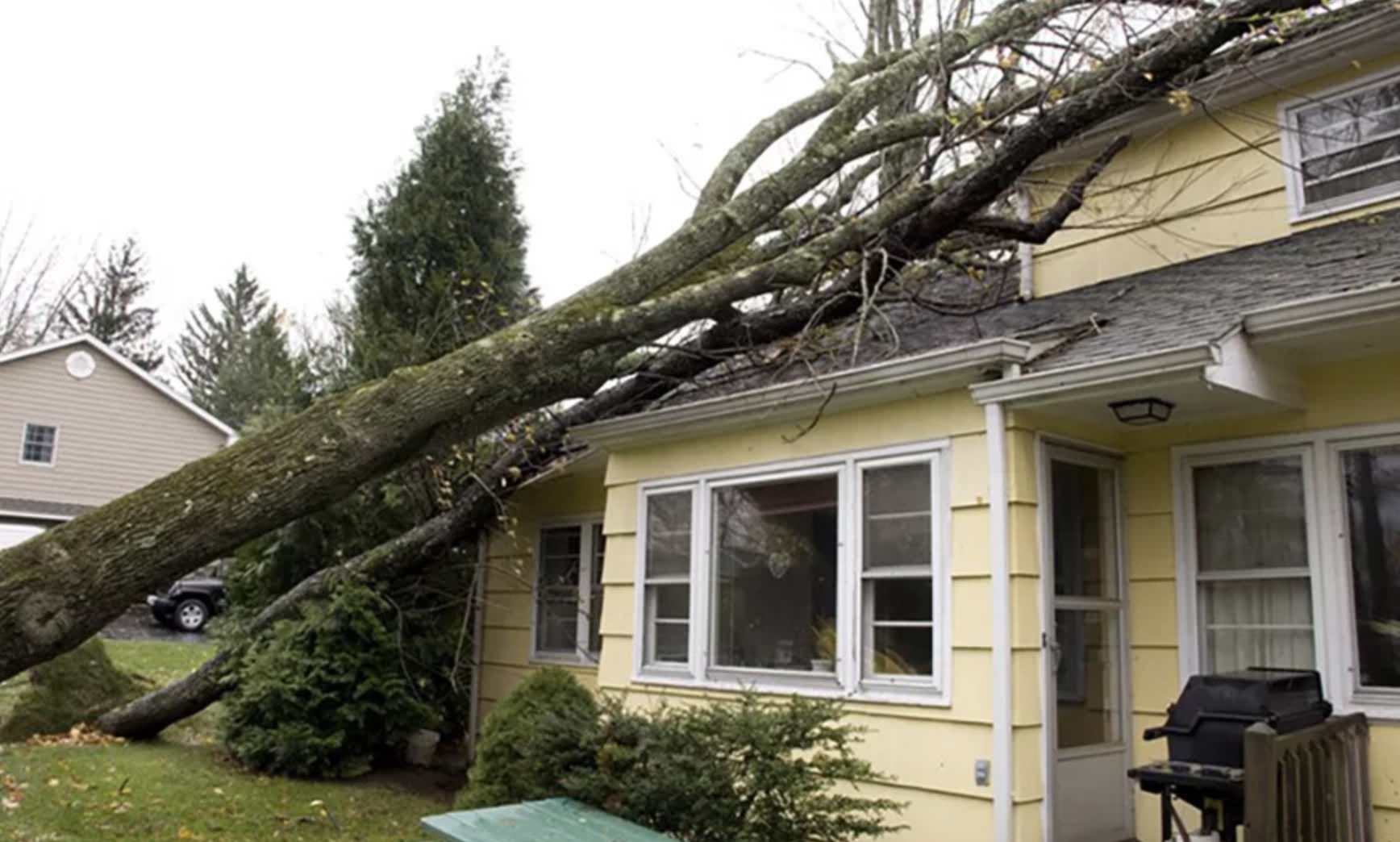
Insurance Cries Roof Claims Hit New High
Experts foresee a looming crisis for property and casualty policyholders
This article, “Insurance Cries Roof Claims Hit New High,” is an excerpt from a post on Roofing Contractor Magazine’s website.
It is not breaking news that property and casualty insurance companies have been struggling with mounting claims, many from natural disasters that have become more frequent over the last decade. However, rumbling among the insurance industry’s chattering class has zeroed in on roof claims.
“The bottom line is that the frequency of claims submitted for roof damage has skyrocketed,” Stephen Poux, executive vice president of Risk Management with The Liberty Company Insurance Brokers, told InsuranceNewsNet, an industry information clearinghouse.
State Farm reported a $1 billion increase in hail-related claims nationwide from 2021 to 2022, but according to the Insurance Information Institute, that may be an undercount. The $30 billion in damage from convective storms in 2022, which includes hail damage, doubled to $60 billion last year.
The III reported that the effects of the post-pandemic inflation shock, lingering echoes of supply chain disruptions, and more extensive repairs — which cost more to fix — translate into an average increase of around $2,000 per claim.
“Insurers are looking at this as the next new flood issue,” said Poux.
Always Bigger in Texas
As many residential roofing contractors can attest, claims for roof damage have occurred most often, and expensively, in areas that experience severe weather conditions like hailstorms, hurricanes, and intense winter weather.
Some of the nation’s most impacted regions include Texas, which consistently ranks as one of the most expensive states for roof damage claims due to frequent hailstorms. The Federal Emergency Management Agency reported an estimated $1.2 billion in insured hail damages in Texas during 2022, second only to Colorado that year.
The Midwest has also seen significant increases in hail damage during the last decade, particularly in states like Minnesota, Arkansas, and Nebraska. The frequency and intensity of hailstorms led claims to top nearly $800 billion, InsuranceNewsNet reported.
Roof repair or replacement claims have also substantially increased in Florida, which has faced a compounded crisis of increased natural disasters and carriers fleeing the state, dropping homeowner coverage altogether, forcing Citizens Insurance, the Sunshine State’s public insurer of last resort, to fill the breach.
In short, damaging weather is occurring everywhere and unpredictably.
“We’re seeing traditionally an area from Texas and Oklahoma into Arkansas, the tornado alley, has grown and expanded to include convective storms in the southeast and the northeast,” Poux said. “The number two state last year for convective storms was Illinois.”
A Roof is the ‘New Car’: Depreciated Values, Higher Deductibles
Experts say the parable of a new car’s value plummeting the moment it drives off the lot has leeched into how carriers treat many claims. Due to more extreme weather, some insurance companies now pay the depreciated or actual cost of older roofs rather than the full replacement cost. They may also require higher deductibles, offer discounts for hail-resistant roofs, or impose surcharges for non-hail-resistant roofs to encourage homeowners to upgrade.
“Carriers are starting to tighten up when it comes to the claims submission process,” Diane Delaney, executive director of the Private Risk Management Association, said. “I think we’re going to start to see carriers putting new parameters that they’ve got to be submitted within 365 days, and then they’re going to put minimums around the size of the hail and the event that was happening.”
Delaney added that carriers are also increasingly requiring claimants to tie a claim to a specific event, which has been happening with increasing frequency — like the claims themselves — leading to the rise of companies like HailTrace, which collects copious amounts of data on hail events for that very reason. They’re going to try and tie it back to the specific date that the storm happened to be able to track back what size that hail was.”
Some roofing contractors bristle at the “tightening up,” Delaney mentioned.
Karla Ferguson, principal and vice president of J&K Roofing in Golden, Colo., outside of Denver, acknowledged that Colorado’s hail, wind, and fire storms have all increased but pushed back on the insurance industry’s notion that payouts have increased solely because of external factors.
“Unfortunately, some insurance companies prolong the approval process by disputing basic state and city codes,” Ferguson said, adding that often, roofing product manufacturers require specific materials and products to keep a roof warranty in compliance.
Those products may be more expensive, thereby increasing the cost of the claim. Either way, storms and inflation are not the only particulars driving the frequency and expense of roof claims — fraud is also a factor.
No Free Lunch
The Coalition Against Insurance Fraud reports that property-related insurance fraud, including roof-damage claims, costs insurers billions of dollars annually. The FBI estimates insurance carriers pay at least $1 billion annually on fraudulent roof claims. Someone has to pay for that, which typically means policyholders through rising premiums as insurers pass on the cost.
 As any reputable roofing contractor will say, it’s not the established firms colluding to scam the system but what are known colloquially as ‘storm chasers.’ These fly-by-night operators go door-to-door and encourage homeowners to file inflated claims or submit fraudulent estimates.
Insurance Cries ‘Roof Claims Hit New High’
Article on Roofing Contractor to continue reading, follow this link.
Insurance Cries ‘Roof Claims Hit New High’ written by;
Bryan Gottlieb is the online editor at Engineering News-Record (ENR).
Gottlieb is a five-time Society of Professional Journalists Excellence in Journalism award winner with more than a decade of experience covering business, construction, and community issues. Insurance Cries ‘Roof Claims Hit New High’

